Call Us for a Free Consultation (504) 267-2333
Call Us for a Free Consultation (504) 267-2333

A heat-stressed New Orleans lawn is usually helped most by watering less often but more deeply, raising the mowing height, and staying off the grass. Browning in July is often dormancy rather than death, and dormant turf typically greens up once temperatures moderate and steady moisture returns. The mistakes that turn stress into loss are shallow daily watering, cutting too short, and fertilizing during the worst of it.
At Big Easy Lawn Care, we get the same call every July from homeowners convinced their lawn is dying. Most of the time it is not, and the panic response does more damage than the heat did.
Warm-season grass browning through a Gulf Coast summer is usually responding to moisture stress rather than temperature alone, and going dormant is a survival response. Whether it comes back depends largely on what you do next.
This guide covers how to read the signs, what to change about watering and mowing, and when the situation is genuinely urgent. Contact us today to get your lawn on a maintenance schedule that accounts for our summers.
Heat stress is a water problem before it is a temperature problem. When the grass loses moisture faster through its blades than the roots can pull from the soil, the plant starts shutting down non-essential growth to survive.
That shutdown is what you see as browning. The plant pulls resources back into the crown and root system, then lets the visible blades go. The result looks alarming, but it is often reversible.
The real danger is what happens underneath. Shallow roots have nothing to fall back on, and a lawn that was watered lightly every day all spring built exactly that kind of root system.
There is a simple field test, and it takes about a minute. Walk across the lawn and look behind you.
Healthy turf springs back and your footprints disappear. Stressed turf holds the footprints, because the blades have lost enough internal pressure to stand back up.
The second test is the crown. Pull a plug of turf and look at the base of the plants where the blades meet the roots. If that tissue is still firm and pale rather than brown and brittle, the lawn is dormant rather than dead.
Most heat stress can wait for the next watering cycle. A few situations cannot, and they usually involve a lawn that was already compromised before the heat arrived.
| Warning Sign | What to Do |
|---|---|
| Footprints staying visible across most of the lawn | Water deeply that evening or the next morning. Stay off the area until it rebounds. |
| Brittle brown crowns when you pull a plug | That section is likely lost. Have it assessed before you water more, since the cause may not be heat. |
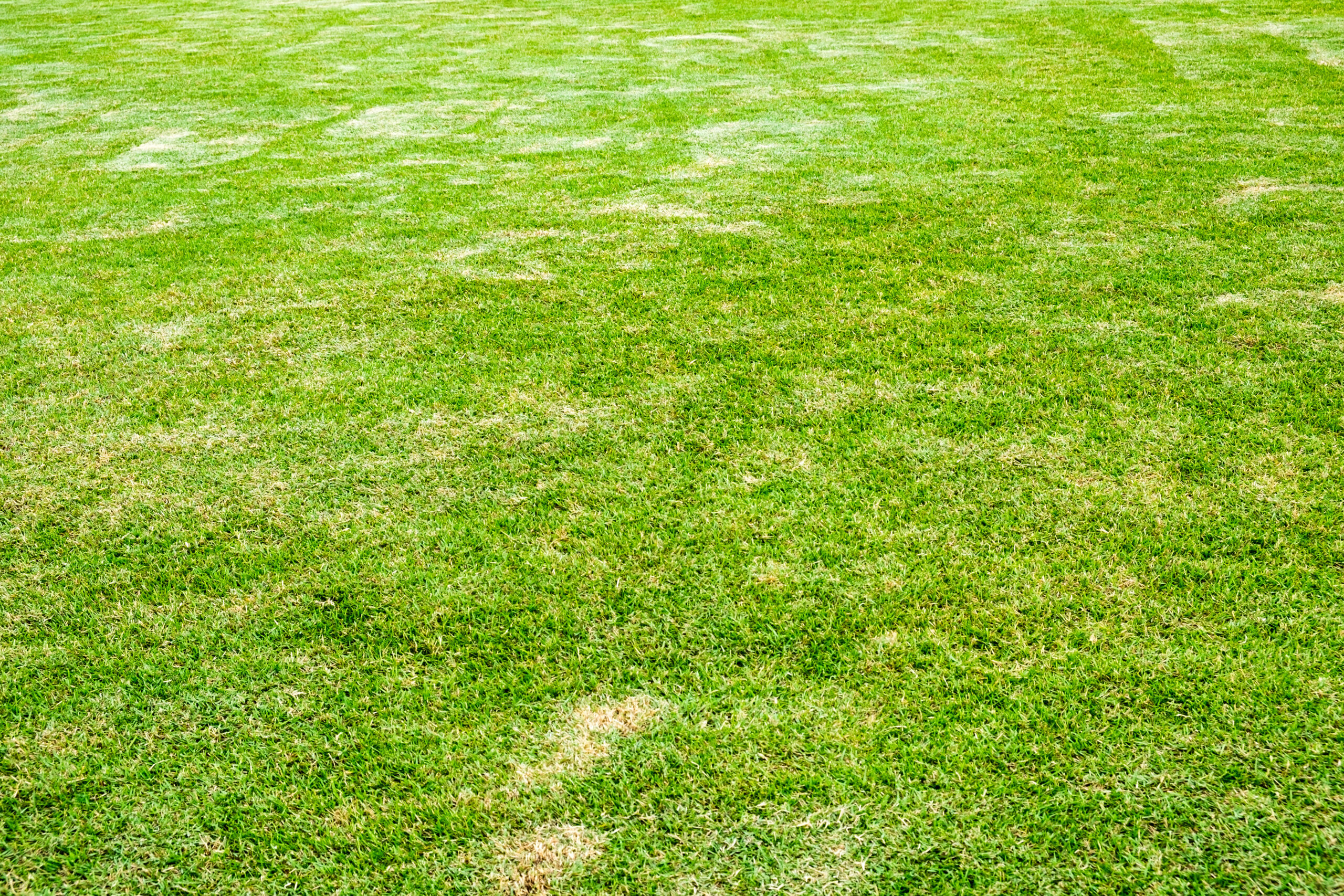
| Browning in sharp patches rather than a gradual fade | Get it looked at. Defined edges usually point to something other than heat. |
| Soil hard enough to resist a screwdriver | Water is running off rather than soaking in. Water in shorter cycles so it can absorb. |
| Stress appearing days after a fertilizer application | Stop fertilizing and water thoroughly. Feeding during heat stress compounds it. |
| Grass flattened along a walking or parking route | Reroute the traffic now. Stressed turf does not recover from wear the way healthy turf does. |
Almost everything that helps a stressed lawn is a change to routine rather than a product you buy. These four adjustments do most of the work.
Deep, infrequent watering encourages roots to grow downward, which is exactly the root system a lawn needs in August. Light daily watering trains roots to stay near the surface where the soil dries out first.
Water early in the morning so less is lost to evaporation and the blades dry before nightfall. Evening watering leaves the lawn wet overnight, which invites problems that heat alone would not cause.
The simplest way to check whether you watered long enough is to push a long screwdriver into the soil afterward and see how far it slides before it stops. Adjust your run time by what that tells you rather than by the clock, since every yard takes water in at its own rate.
Taller grass shades its own soil, holds moisture longer, and supports a deeper root system. Cutting short during a heat wave removes the plant’s own shade at the moment it needs it most.
Raise the deck toward the top of the recommended mowing range for your grass type and leave it there until the heat breaks. Our lawn cutting crews adjust height seasonally rather than mowing to one setting year-round.
If the lawn gets ahead of you during a wet stretch, bring it back down over a few cuts instead of taking it all off in one pass. Scalping stressed turf strips away its shade and a large share of the blade it feeds itself with at the same moment.
A dull blade tears the grass instead of cutting it, and torn tips lose water faster and brown at the edges. On a lawn that is already stressed, that ragged edge shows up sooner than it would in spring.
Sharpen or replace blades before the hottest stretch rather than during it. A clean cut closes faster, which matters more when the plant is already rationing what it has.
You can spot a dull blade a day or two after you mow by looking at the cut tips across the lawn. Frayed, whitish ends mean the grass was torn rather than sliced, while a sharp blade leaves an edge that stays green.
Foot traffic on wilted turf crushes blades that cannot spring back, and the wear pattern can persist long after the heat passes. Reroute play, parking, and pet routes while the lawn is under stress.
Hold off on high-nitrogen fertilizer until the lawn is actively growing again. Pushing top growth while the roots cannot supply it makes the plant more vulnerable, not less.
Mowing counts as traffic too, so skip a cut when growth has stalled rather than running the mower across dormant turf to keep a schedule. The same caution applies to weed control, since herbicide put down during heat stress can add injury to a lawn that is already struggling.
Recovery tracks the weather more than anything you do. Once temperatures moderate and consistent moisture returns, dormant warm-season turf typically greens up from the crown outward.
Patchy recovery is normal and does not mean those areas are dead. Thin spots often fill in as the surrounding grass spreads, especially in the running grasses common across New Orleans lawns.
If an area shows no change after conditions improve, it is worth investigating. At that point the cause is usually something the heat exposed rather than the heat itself, and our landscape restoration team can assess whether the area needs reworking.
The difference between a lawn that browns and bounces back and one that thins out permanently comes down to a handful of habits, most of them free. Watering deeply, mowing high, and staying off stressed turf will carry a lawn through almost any summer we get.
At Big Easy Lawn Care, we adjust mowing height and schedule by season so your lawn is not fighting the heat on a spring routine. Call us today to get on a maintenance plan built around our climate.
No. Daily light watering keeps roots shallow, which makes the lawn more vulnerable to heat, not less. Water deeply and less often, ideally early in the morning, so moisture reaches further down, roots follow it, and the blades dry before nightfall.
Usually dormant. Pull a small plug and look at the crown where the blades meet the roots, and if that tissue is firm and pale rather than brown and brittle, the plant is alive and conserving resources. Dormant warm-season grass typically greens up once temperatures moderate and consistent moisture returns.
Raise the mower toward the top of the recommended mowing range for your grass type and hold it there through the hottest stretch. Taller blades shade the soil, slow moisture loss, and support deeper roots. Cutting short in a heat wave removes the plant’s own shade exactly when it needs it most.
Most often the watering is too light and too frequent, so moisture never reaches the root zone and the surface stays damp. Compacted soil also causes water to run off rather than soak in. Watering in shorter cycles with a pause between them lets hard ground absorb more of it.
Hold off. High-nitrogen fertilizer pushes top growth at a time when stressed roots cannot supply it, which makes the plant more vulnerable rather than more resilient. Wait until the lawn is actively growing again and conditions have moderated before resuming a feeding schedule.
Early morning. Watering then means less is lost to evaporation than in the afternoon, and the blades have the whole day to dry. Evening watering leaves the lawn wet through the night, which encourages problems that heat by itself would not cause.
Yes. Wilted blades have lost the internal pressure that lets them spring back, so foot traffic crushes them rather than bending them. The resulting wear pattern can stay visible long after the heat passes, so reroute play, parking, and pet routes while the lawn is under stress.
Heat stress usually produces a gradual, even fade across the lawn. Sharply defined patches with clear edges generally point to something else, such as a watering coverage gap, a buried obstruction, or a localized problem. Have those areas assessed rather than treated as heat damage.
 By
BigEasyLawnCare
By
BigEasyLawnCare  Aug 17, 2026