Call Us for a Free Consultation (504) 267-2333
Call Us for a Free Consultation (504) 267-2333

The biggest mistakes with fresh sod in New Orleans are letting it dry out, walking on it too soon, leaving gaps at the seams, and mowing or fertilizing before it roots. Water it right after laying until the soil underneath is wet, then at least once a day through the first week. Keep traffic off for at least two weeks, and hold fertilizer for at least three weeks after laying.
At Big Easy Lawn Care, we know how often new sod goes brown in its first few weeks. Usually the sod was healthy when it arrived, and the installation was fine.
What failed was the watering in the days right after. Fresh sod has very little root left to work with, so it can only draw on the thin layer of soil sitting directly beneath it.
The window to get this right is short, and it closes fast in our heat. Contact us today to set up mowing and upkeep for your new lawn once it takes hold.
In the first week, the mistakes that do the most damage are letting fresh sod dry out, walking on it, and leaving gaps at the seams. With almost no root left, a missed watering on laying day or a few days of foot traffic can damage the installation.
Do not wait until the whole yard is finished to start watering. The LSU AgCenter calls for irrigation directly after installation, so water each section as it goes down rather than letting strips sit dry in the sun.
The soil underneath should be wet, not just the blades. Lift a corner and check that the ground below is damp. Dry soil under wet blades is the failure mode that catches most homeowners by surprise.
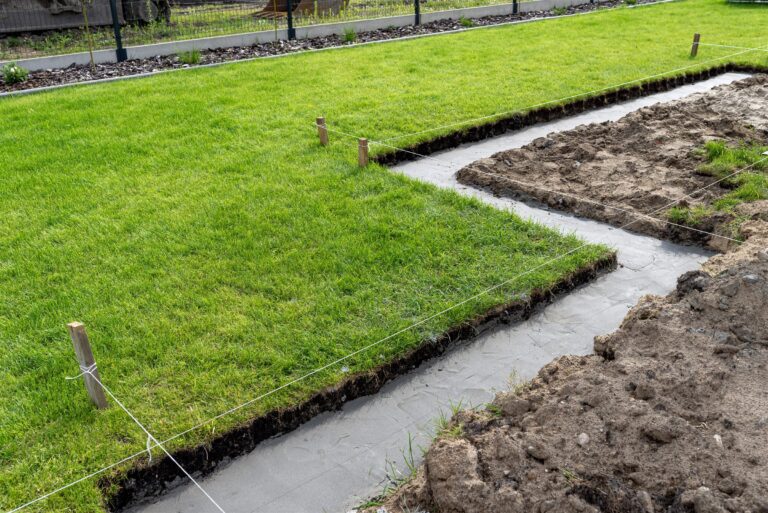 Walking on fresh sod presses the strips into uneven contact and breaks the seams apart. Two weeks is the minimum, which gives the grass time to root and the soil time to settle.
Rope off the area if that is what it takes. Every footprint in the first days becomes a low spot that holds water later.
The same applies to anything parked or stacked on the new lawn. A wheelbarrow left overnight leaves a flattened patch that never quite matches the rest.
Strips shrink slightly as they dry, and gaps open along the seams. Those gaps dry out fastest and are where weeds take hold first.
Push the strips back together by hand and fill any remaining line with a little topsoil. Our weed cutting service handles the growth that gets into seams before it spreads.
Frequent irrigation is what carries new sod through establishment. Without rain, the LSU AgCenter calls for watering once a day through the first week, less in the second week, and less again in the third.
Early on, the roots are shallow, so deep soaking runs straight past them. Shorter, more frequent cycles keep the top layer consistently moist. The target is soil that is wet underneath but not saturated.
Morning is the best time in our climate. Evening watering leaves blades wet overnight, which invites the fungal problems our humidity already encourages.
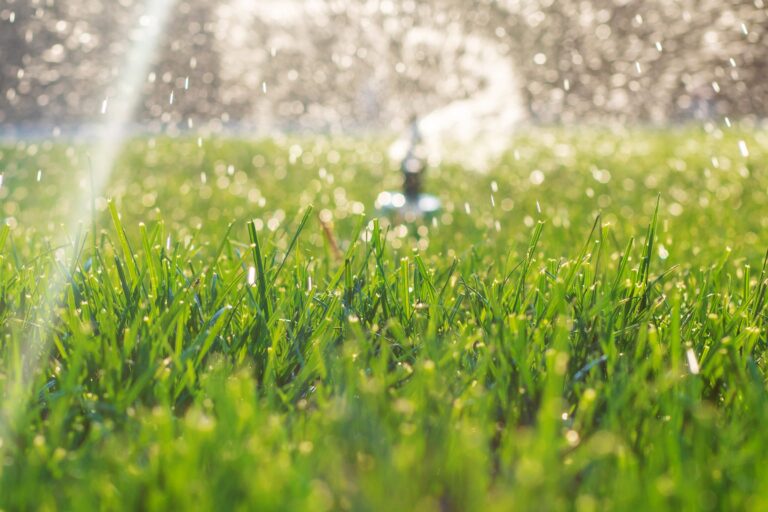 Our summer storms can drop enough water in an hour that you can skip a cycle entirely. Check the soil rather than trusting the forecast or a timer.
Push a finger into a seam. If it comes out with damp soil on it, you can wait.
Heat matters as much as rain. A stretch of hot, dry days pulls moisture out of the surface faster than any fixed schedule anticipates, so let the soil set the pace.
Once roots move into the soil beneath, shift from frequent light watering toward less frequent, deeper cycles. That change trains roots downward instead of keeping them at the surface.
Tapering too early is the most common mistake we see. Tapering too late leaves a shallow-rooted lawn that struggles in the first dry spell.
There is a simple physical test, and it beats guessing by appearance. Take hold of a corner of a strip and lift it slowly.
If it lifts easily, the roots have not taken. The more it resists, the further the roots have grown into the soil below. With warm soil, establishment takes about three weeks.
Test in several places rather than one. Sod near a downspout or in a low corner roots at a different pace than the strip along a hot driveway.
Do the test gently and always at a seam, not in the middle of a strip. Tearing a well-rooted piece loose to check it undoes the progress that section has made.
| What You See | What It Means | What to Do |
|---|---|---|
| Corner lifts with no resistance | No rooting yet | Keep watering frequently, stay off it, do not mow |
| Corner resists and tears slightly | Roots are moving down | Begin tapering toward deeper, less frequent watering |
| Strip will not lift at all | Well rooted | Mow once it is tightly rooted and the ground is firm |
| Edges curling, seams wide | Drying out | Increase frequency and close the seams by hand |
Mowing too early tears sod that is not anchored. Mowing too late lets the grass get long enough that the first cut removes too much at once.
The first cut comes about two weeks after laying, or whenever the sod is tightly rooted. Just as important, make sure the ground is not saturated.
A mower on soft ground ruts the surface and compacts the soil you just prepared. Wait until the ground firms up after heavy rain before bringing equipment across it. Running the mower diagonally across the seams also reduces the chance of a wheel lifting a corner.
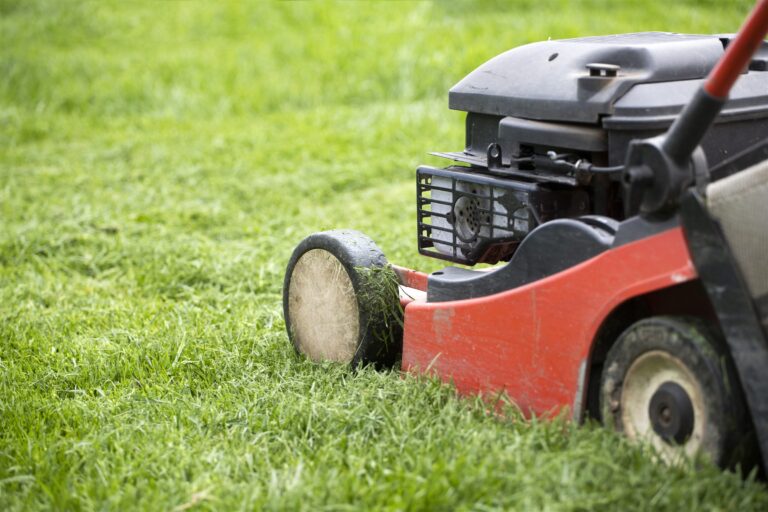 Remove no more than one third of the leaf blade in a single cut. Taking more stresses grass that is still building its root system.
If the lawn got ahead of you, cut it down over two or three passes several days apart. Our lawn cutting service can take over regular mowing once the new lawn is established.
The strip along a driveway dries fastest because of reflected heat, and low corners stay wet longest. Both show problems before the middle of the lawn does.
Walk the perimeter weekly for the first month. Catching a dry edge early is a watering adjustment, not a replacement strip. When a stretch has already failed, our landscape restoration service can help bring that area back.
Pay attention to the strip along any south- or west-facing wall. Reflected heat off brick and concrete puts that line under more stress than anywhere else in the yard, and it is usually the first place you will see curling.
Laying sod is the quick part. The weeks that follow are when it either roots or fails, so watch the soil rather than the calendar.
At Big Easy Lawn Care, we handle regular mowing and lawn upkeep, so your new sod gets careful first cuts once it has rooted. Call us today to set up mowing for your new lawn.
Water it right after laying, then, without rain, once a day through the first week. Reduce that in the second week, and reduce it again in the third. Check the soil under a lifted corner rather than relying on a fixed timer, since heat and rain change what the lawn needs.
The LSU AgCenter puts establishment at about three weeks when temperatures are warm. Warm-season grasses grow slowly once soil drops below 70 degrees and stop growing below 60, so cool-season installations take considerably longer. Confirm it by lifting a corner, since firm resistance means roots have moved into the soil.
Mow about two weeks after laying, or whenever the sod is tightly rooted, and only when the ground is firm enough that the mower will not rut it. Running the mower diagonally across the seams reduces the chance of lifting a corner. Remove no more than one third of the blade on that first pass.
Wait at least two weeks, the minimum the LSU AgCenter gives for restricting traffic on new sod, so the grass can root and the soil can settle. Foot traffic before then presses strips into uneven contact, breaks seams apart, and leaves low spots. Rope the area off if children or pets use the yard regularly.
The LSU AgCenter puts the best sodding window at mid-spring through summer, when soil is warm enough for roots to move quickly. Dormant-season sodding can succeed but carries more risk, since warm-season grasses stop growing once soil falls below 60 degrees. If timing is flexible, aim for spring rather than the peak of summer heat.
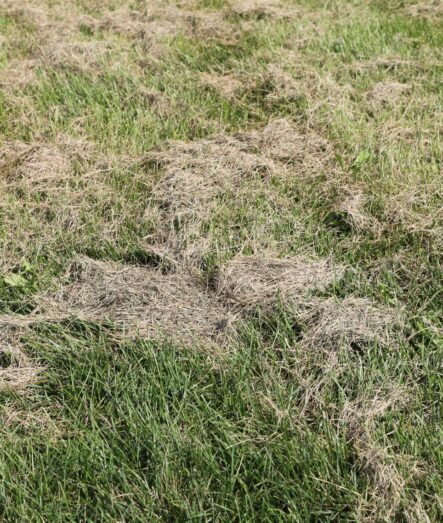
Insufficient water is the usual cause, especially in the first weeks when roots cannot reach moisture below. Browning along seams and edges points to drying out rather than disease. Check the soil under a strip before treating for anything else.
Wait at least three weeks after laying. The LSU AgCenter generally does not recommend fertilizer at planting, because cut sod has too little root to take up nutrients until it establishes. Feed once the sod has rooted into the soil, which can take one to two months depending on conditions, then move to a regular schedule.
After 1 week, new sod should still be green, with tight seams and edges lying flat. It is usually not rooted yet, since establishment takes about three weeks in warm weather, so a lifted corner may come up easily or with only slight resistance. Browning edges, curling, or widening seams usually mean it is drying out.
 By
BigEasyLawnCare
By
BigEasyLawnCare  Sep 21, 2026